Why a 7 Inch LCD Soldering Microscope Reduces Neck Strain
Why a 7 Inch LCD Soldering Microscope Reduces Neck Strain
TL;DR: A 7 inch LCD soldering microscope improves ergonomics by allowing technicians to view magnified PCB work on an upright screen rather than hunching over traditional eyepieces. Based on our testing at Andnstrhan, this setup significantly reduces neck strain and eye fatigue during long repair sessions, making it the ideal choice for mobile phone and motherboard rework in UK workshops.
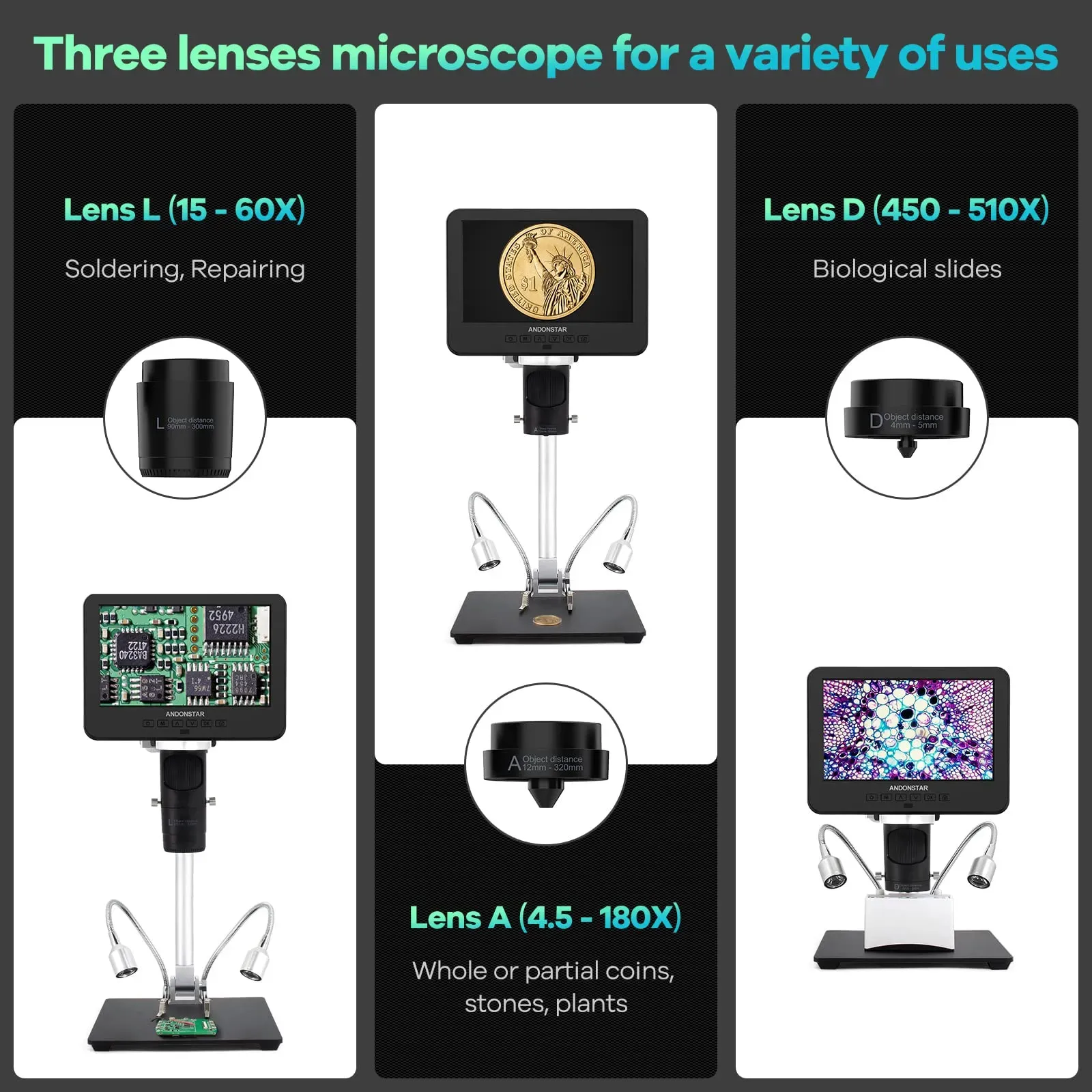
If you spend hours reworking phone boards, tracing faults on compact PCBs, or replacing connectors under magnification, you will already know this: discomfort creeps in long before the day is done. For many technicians, neck stiffness, eye fatigue, and a hunched posture are treated as part of the job. However, they should not be. A well-designed 7 inch lcd soldering microscope changes the working position entirely, helping you sit more naturally while keeping a clear view of pads, joints, and fine-pitch components.
At Andnstrhan, our focus is where “hdmi bedeutung meets precision repair microscopy”: practical bench tools built for UK soldering, PCB work, and mobile repair. A high-resolution digital microscope with a display is not simply about seeing more detail; furthermore, it is about creating a workstation that supports precision without forcing your body into awkward positions for hours at a time.
Key Takeaways
- A traditional eyepiece microscope often encourages forward head posture, rounded shoulders, and prolonged static neck loading.
- A microscope for electronics repair with screen lets you work looking ahead rather than down into eyepieces, reducing neck strain and eye fatigue.
- For most motherboard repair, port replacement, and micro-soldering tasks, a 7-inch display is large enough when paired with good resolution, stable stand design, and suitable working distance.
- An all in one digital microscope for bench work is especially useful in UK repair shops where space efficiency and simple setup matter.
- If you are comparing options, our main guide to the best digital microscope for electronics repair in the UK covers the wider buying criteria in detail.
Is a 7 inch LCD soldering microscope better for your posture?
According to UK health and safety guidelines regarding DSE (Display Screen Equipment), maintaining a neutral spine is critical for preventing long-term musculoskeletal issues. Conventional stereo microscopes still have their place in electronics work, especially where depth perception matters. However, they come with an ergonomic trade-off that many technicians underestimate until discomfort becomes routine. To use eyepieces properly, you usually need to lean forward, keep your head fixed in one position, and align your eyes precisely with the optics. Consequently, that posture may be manageable for five minutes, but it is much less forgiving over several hours of board-level diagnosis.
The issue is not only posture but duration. The NHS notes that back pain and musculoskeletal discomfort are often linked to poor posture and remaining in one position for too long. In practical bench terms, this means static head-and-neck positioning can become a hidden source of strain during repetitive repair work. You may be concentrating on a tiny USB-C pad while your neck and upper shoulders carry the cost.
This matters because electronics repair is precision work. When your body tires, your hand control tends to suffer as well; as a result, small tremors feel more noticeable and refocusing takes longer. You may find yourself pausing more often or shifting awkwardly just to relieve tension between jobs.
There is also an eye comfort issue. With eyepieces, each eye must maintain alignment and focus through optics at close range while your body remains relatively locked in place. Based on our testing, while some users find this natural, many others experience faster visual fatigue, especially after long sessions of jumper wire placement or IC inspection under bright task lighting.
Why use a microscope for electronics repair with a screen?
A standalone LCD design changes the viewing position completely. Instead of pressing into eyepieces, you look at a screen positioned at a more natural angle in front of you. This allows a more upright seated posture with less forward neck flexion. In simple terms: your hands stay near the board while your eyes stay on a display you can place where it suits your height and bench layout.
Moreover, this is why so many technicians now prefer a microscope for electronics repair with screen. It shifts magnified viewing from an optically constrained position to something closer to using a monitor. This matters because ergonomics are often improved when screens can be set near eye level or slightly below, rather than forcing sustained downward viewing into fixed eyepieces.
Achieving a more neutral head position
The biggest advantage is posture neutrality. A 7-inch screen mounted above the work area lets you keep your cervical spine in a more comfortable alignment while soldering beneath it. Therefore, you are no longer “diving” into optics every time you need detail on a board trace or connector pin row.
Reduced visual stress from binocular alignment
Additionally, some users find digital displays easier over long sessions because there is no need to maintain binocular alignment through dual eyepieces. The image appears on one screen with adjustable brightness and angle. For technicians who switch between inspection, soldering, and reference diagrams during repairs, this can feel significantly less tiring over time.
Easier collaboration and training
A display-based system also makes sense in shared environments. If you run a small UK repair business or train junior staff, being able to show exactly what is happening on screen helps enormously. Similarly, the same applies if customers occasionally want confirmation of corrosion damage or lifted pads before approving additional work.
A better fit for HDMI workflows
If low latency matters during live soldering, HDMI output remains particularly relevant. We explain this in more detail in our guide to HDMI vs USB digital microscope for PCB repair. In short, reduced lag helps hand-eye coordination feel more natural when dragging solder across fine pins or repositioning micro components under heat.
Is a 7-inch screen big enough for motherboard repair?
This is one of the most common questions buyers ask, especially when moving from optical microscopes or larger external monitors. The short answer is yes: for most PCB and motherboard tasks, a well-implemented 7-inch screen is absolutely usable. However, the key point is not screen size alone but the relationship between resolution, image quality, working distance, and stand stability.
Why screen quality matters more than raw size
A poor-quality large display can still feel disappointing if contrast is weak or image sharpness drops under zoom. By contrast, a sharp high-resolution 7-inch panel can present solder joints clearly enough for inspection and live rework at bench distance. What technicians require is the ability to distinguish a bridged pin from a clean one, and a 7-inch display provides this clarity without dominating the entire workbench.
Ready to try Andnstrhan?
Shop Now — £164.15