Working Distance for Micro Soldering: How Much Clearance Do You Need?
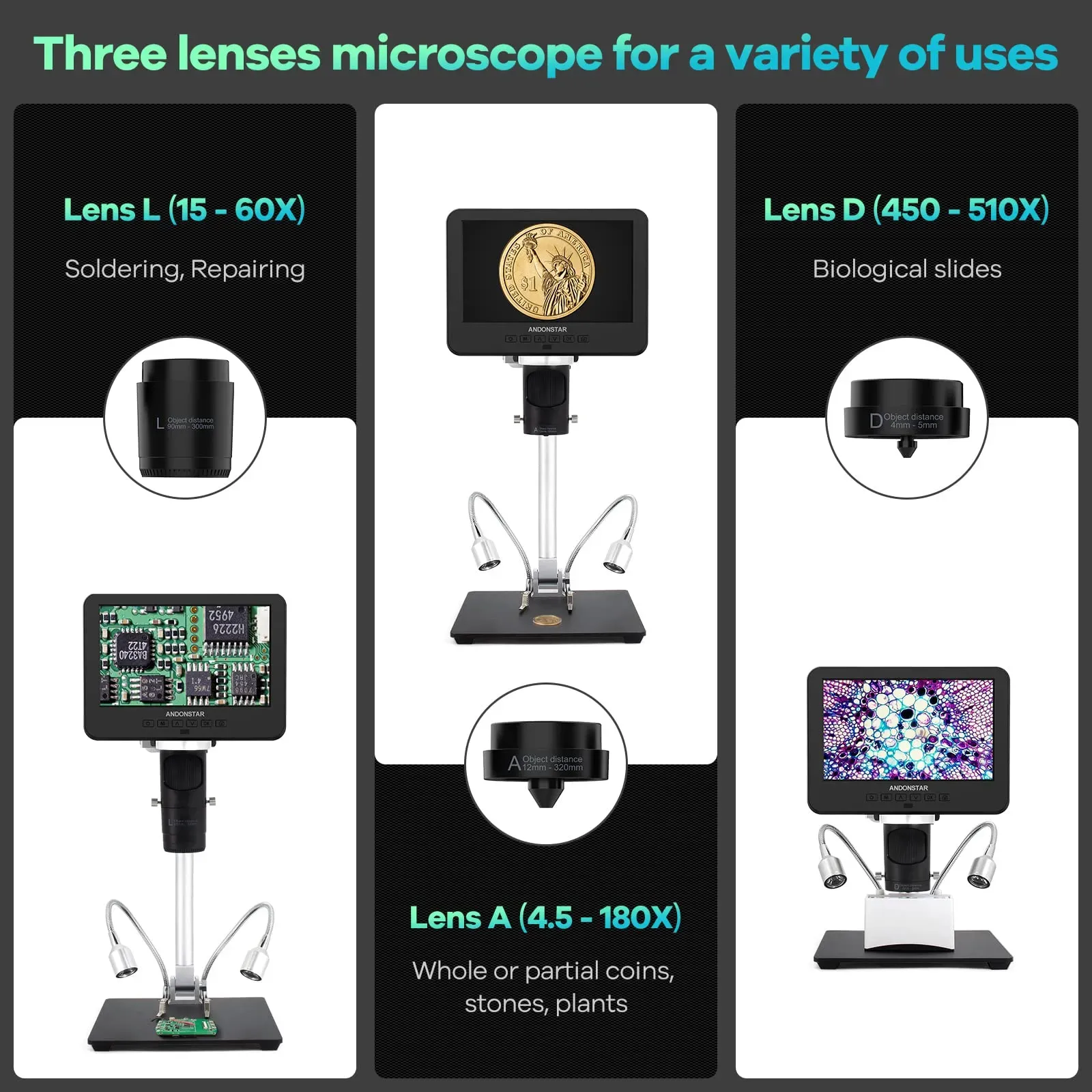
Short answer: working distance is the gap between the bottom of the lens and your circuit board — and for micro-soldering it is the spec that decides whether your iron fits under the scope at all. Set the distance the task needs first, then use only as much magnification as still leaves that room. Chasing big zoom numbers is how you end up with a lens nearly touching the board and nowhere to put your tools.
What working distance actually means
Point a microscope at a board and focus it: the space left between lens and board is the working distance at that setting. It is not a fixed number for a scope — it changes with the lens fitted and the magnification in use. More magnification almost always means the lens sits closer, which is exactly the direction you do not want while holding a hot iron. If your current magnifier leaves you nudging the lens aside to get a tool in, you already understand the problem better than most spec sheets explain it.
Why this number beats the magnification number
It is easy — especially when upgrading from a head-worn magnifier that never got in the way of your hands — to shop by zoom figure, because that is the number in big type. But consider what each spec buys: magnification shows you more detail of a joint; working distance is what lets you do something about it with an iron, tweezers or a hot-air nozzle while watching. For repair work, seeing without room to act is just inspection. Enough magnification to read component markings and judge a joint, plus generous clearance, beats maximum zoom every time.
A simple setup routine for each job
The pleasant surprise after fuzzy head-worn optics is how repeatable a stand-mounted scope is once you give each task its own recipe. Worth writing down on a card by the bench:
- Whole-board look (finding burnt parts, corrosion, missing components on an old radio or console board): wider lens, column raised, low magnification. Maximum view, maximum room.
- Joint work (reflowing a cracked joint, replacing a capacitor): closer lens or higher magnification, column set so the iron still slides in comfortably at a natural angle.
- Inspection passes (checking your own work): magnification up as far as you like — the iron is down, so clearance no longer matters.
Mark the column heights that work for each mode once you find them. Switching tasks then takes seconds instead of a refocusing session, and the scope stays used instead of becoming bench clutter — the failure mode of most impulse-bought optics.
The trade-offs behind the trade-off
- Field of view: more magnification means seeing less board at once; navigating a large board at high zoom is like reading a newspaper through a straw.
- Depth of field: higher magnification means a thinner slice in focus, so taller components go blurry top or bottom.
- Shake: every wobble is magnified with the image. High zoom on a light stand shows you your own pulse; it is the stand, not your hands, that needs fixing.
The hot-air special case
Hot-air nozzles are taller than iron tips and need space around the target for airflow, so they set your minimum clearance. If you plan to lift shielded connectors or rework larger parts, make sure the scope still focuses usefully with the column high enough for the nozzle — this single check separates scopes designed for rework from scopes designed for looking. A multi-lens bench unit such as the Andonstar AD246S-M handles it by giving survey work and close work different lenses on the same stand, each with sensible clearance, and its 7-inch screen means the whole setup runs standalone — no computer between you and the board.
Where this guide hands over
Working distance is one pillar of a buying decision, not the whole of it. For the full checklist — display, stand, budget bands, digital versus optical — carry on to the best soldering microscope UK buying guide; for a professional bench-requirements view, the electronics repair microscope guide goes deeper.
Frequently asked questions
How much working distance do I need for a soldering iron?
Enough that the iron reaches the joint at a natural angle with the lens focused — as a practical test, your fist should pass between lens and board at your normal soldering magnification. Hot-air nozzles need more headroom again, so check clearance against the tallest tool you plan to use rather than a single quoted figure.
Does more magnification make soldering easier?
Beyond a point, the opposite. Extra zoom shrinks the field of view, thins the depth of field and magnifies every tremor, while pulling the lens closer to the board. Use the least magnification that shows the joint clearly, and save the high settings for inspection after the iron is down.
Why does my image shake at high zoom?
Because magnification amplifies motion as well as detail — including bench vibration and your own pulse. A heavier base, a rigid column and resting your forearms help far more than steadier hands. If the shake persists, drop the magnification; the image detail you lose is usually detail you did not need while working.
Do I need to measure working distance exactly before buying?
No — you need honest behaviour, not millimetre precision. Confirm the scope focuses with room for your tallest tool at the magnification you will actually work at, and that lens changes for closer work still leave usable clearance. A scope sold for rework should make that easy to verify; treat vagueness as an answer.
A scope with room for your tools underneath.
Shop Now — £257.40