Working Distance & Magnification for Micro Soldering Setup
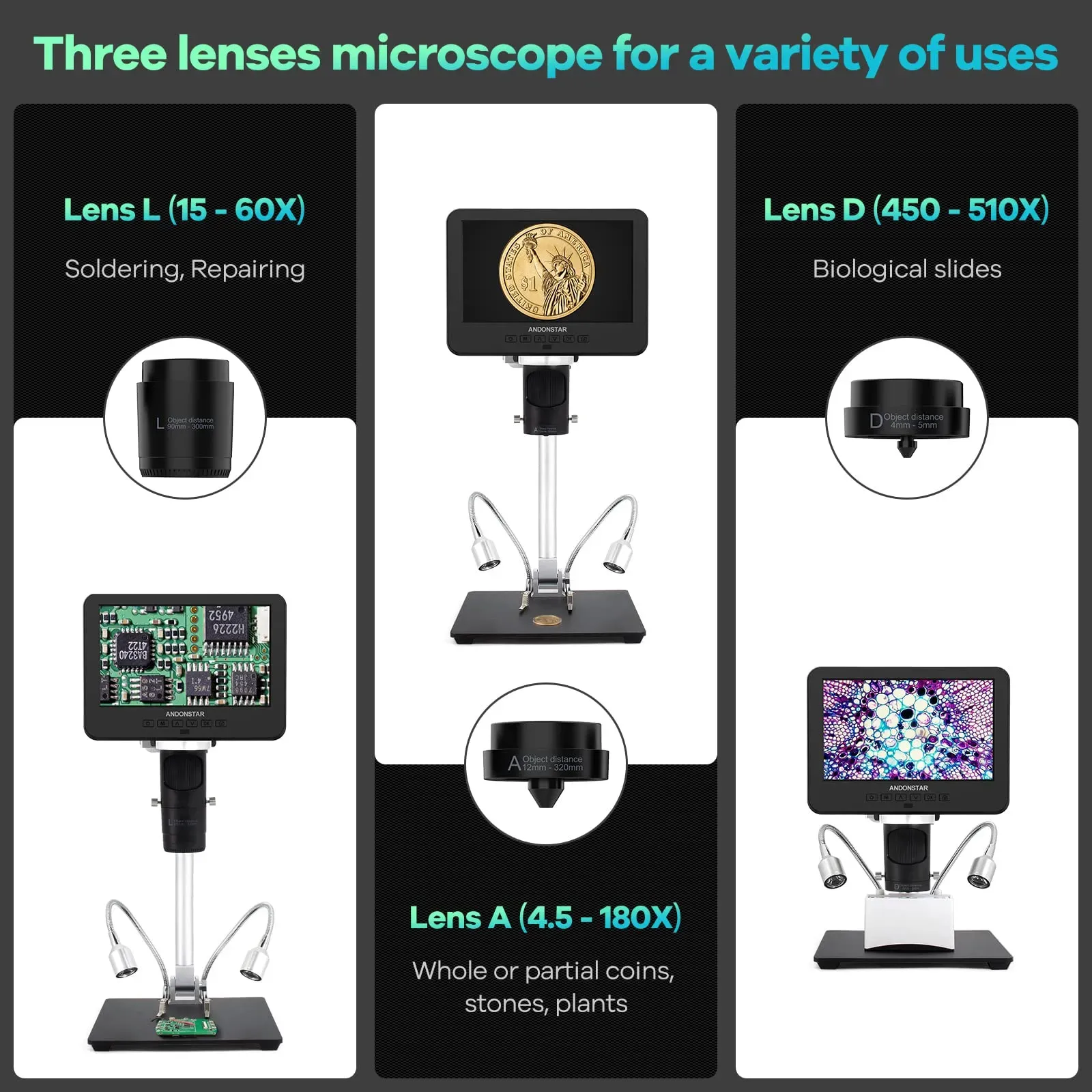
TL;DR: For effective micro-soldering, a digital microscope must provide a minimum working distance of 100mm to 150mm. This clearance is essential for maneuvering soldering irons and tweezers without obstructing your view or damaging the lens. Based on our testing at Andonstar (Andnstrhan), a high-definition HDMI connection is superior for real-time repairs as it eliminates the lag often found in USB-only setups.
When performing precision electronics repair, the most critical factor isn't just magnification; it is finding a digital microscope with working distance for soldering that allows for tool clearance. If the lens is too close to the PCB, you will struggle to angle your iron correctly, lead to tip-to-lens collisions, and risk coating your optics in flux fumes. For UK professionals adhering to IPC-A-610 standards, achieving a clear, high-definition view while maintaining a 10cm to 15cm gap between the lens and the motherboard is the industry benchmark for success.
Is a digital microscope good for micro soldering?
Many technicians wonder if digital systems can truly replace traditional optical stereomicroscopes. Based on our testing of the latest CMOS sensors, the answer is a definitive yes—provided the system offers zero-latency output. For micro-soldering, the "HDMI bedeutung" (significance of HDMI) cannot be overstated; a direct HDMI connection to a monitor ensures that what you see happens in real-time, which is vital when dragging solder across a row of pins.
Furthermore, digital microscopes allow for a more ergonomic upright posture, reducing the neck strain common in long hours of motherboard repair. However, you must ensure the frame rate is at least 60fps to avoid the "ghosting" effect during movement. For a deeper dive into the technology, see our comprehensive guide to digital microscopy.
[IMAGE: Technician using an Andnstrhan digital microscope with ample working distance for a soldering iron]How much magnification do you need for PCB repair?
A common misconception in the UK repair community is that "more is better." In reality, excessive magnification (over 100x) often results in a shallow depth of field and a tiny field of view, making it impossible to see the surrounding circuit context. According to UK industry best practices and IPC-A-610 standards, a magnification range of 10x to 40x is the "sweet spot" for most SMD and 0402 component work.
At these levels, you maintain enough perspective to navigate the board while seeing enough detail to identify cold solder joints or bridged pins. High-resolution sensors, like those found in Andnstrhan's professional range, allow you to use lower optical magnification while retaining crisp digital zoom capabilities, effectively giving you the best of both worlds.
How to choose the right working distance for soldering
The "working distance" is the measurement from the bottom of the microscope objective lens to the surface of the PCB when the image is in focus. If you are searching for a digital microscope with working distance for soldering, you should aim for a range of 100mm to 150mm (10-15cm). Consequently, this provides enough "airspace" to work comfortably with a hot air station or a chunky soldering iron handle.
When the working distance is too short, flux vapours rise directly into the lens, eventually clouding the glass. To mitigate this, many Andnstrhan models include a replaceable UV filter that acts as a sacrificial shield. Always check that the stand height is adjustable enough to accommodate various board thicknesses and jig heights without sacrificing focus stability.
Tool clearance: Using tweezers and irons under the lens
Effective tool maneuvering requires more than just vertical space; it requires lateral clearance. Because you are often working at an angle, your soldering iron tip may be 2cm away from the component, but the handle or your hand might be much higher. Therefore, a tall, stable stand is a non-negotiable requirement for any serious microscope for motherboard repair.
Additionally, consider your lighting. If the light source is too close to the board, it can create "hot spots" or glare on the solder joints, making it difficult to see the wetting of the solder. We recommend using adjustable LED ring lights or gooseneck lamps that allow you to cast light from a side angle, highlighting the topography of the solder fillets. For more on setting up your bench, read our guide on repair shop ergonomics.
[IMAGE: Close-up of 0402 components under an Andnstrhan lens with 120mm working distance]Best microscope setup for iPhone and motherboard micro-soldering
For intricate tasks like iPhone "sandwich" board separation or FPC connector replacements, precision is paramount. The Andnstrhan philosophy—where HDMI bedeutung meets precision repair microscopy—ensures that every trace and pad is rendered in 1080p or 4K clarity. This level of detail is essential for identifying micro-cracks in solder that a standard magnifying glass would miss.
When selecting your setup, prioritise a large 7-inch to 10-inch integrated screen or a high-quality external monitor. This setup allows you to keep your eyes on the work without squinting. If you are choosing between different output types, be sure to check our comparison on HDMI vs. USB microscope outputs to understand why HDMI is the gold standard for micro-soldering.
Frequently Asked Questions
Does a longer working distance reduce image quality?
Not necessarily. While a shorter distance can sometimes offer higher peak magnification, modern high-quality optics are designed to maintain sharp resolution at 150mm. It is a trade-off between "zoom power" and "usability."
How do I protect my lens from soldering fumes?
According to UK COSHH regulations, you should always use a fume extractor. However, even with extraction, some residue can reach the lens. Using a protective lens cover or a UV filter is the best way to keep your primary optics clean.
Ready to upgrade your bench? Explore the Andnstrhan range of professional digital microscopes, specifically designed with the working distance and clarity required for modern electronics repair.
Ready to try Andnstrhan?
Shop Now — £164.15